


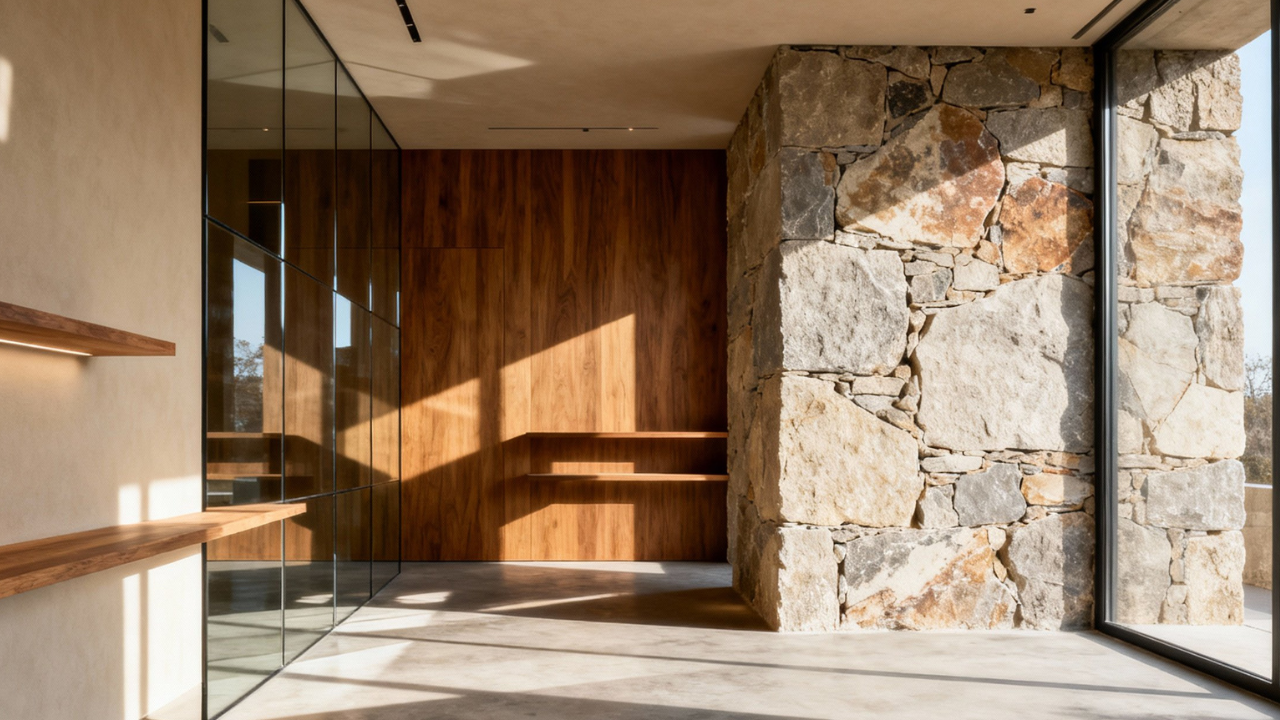
In contemporary architecture, the design element that calls attention as one that substantially impacts the aesthetic and emotional character of the space, and even the personality that it creates, is the use of texture. Beyond mere decoration, texture serves as the tactile soul of a building. Just how the rough and the smooth are combined afterwards creates an effective whole that brings depth and character, and becomes an environment that feels warm, grounded, and intensely human. This interplay moves architectural design away from sterile perfection and toward a more sensory-rich experience.
A Dialogue Between Rough and Smooth
Contrasting surfaces provide an elegant and sophisticated technique of adding visual and physical depth to any room. Rough surfaces, such as raw concrete, unpolished stone, and reclaimed wood, express authenticity and emphasize a deep-rooted affinity for nature. Conversely, smoothened surfaces, such as polished metal, tempered glass, and finely sanded wood, increase elegance, reflect light, and add a sense of modern polish.
When these materials meet, they provide an effective and balanced visual statement. For instance, exposed concrete, which can often feel cold and industrial if left alone, becomes friendlier and warmer because of the presence of solid wood accents. Nature-infused stone, having characterful and noticeable pores, becomes more elegant and sophisticated when framed by the presence of sleek, transparent glass. Even matte metal finishes become more noticeable and obvious due to the presence of irregular, natural surfaces nearby. This dialogue ensures that the space remains dynamic rather than static.

The Depth That Color Alone Cannot Offer
While the presence of color can influence mood, it is the presence of texture that truly influences the physical and emotional experience of a space. Color is often a flat medium, but textured surfaces allow for varying levels of light reflection and shadow play that simply do not occur on smoother, monochromatic surfaces.
Texture interacts with the sun’s movement throughout the day, creating a living environment. While the harsh light of morning can disrupt and highlight the natural grain of the stone, the soft light of the afternoon brings out the subtle gloss of metal and the delicate, soft essence of linen drapes. The space varies from one moment to the other, offering some very interesting possibilities and visual transformations that are not achievable through the use of color alone. This “layering” of materials ensures that the architecture feels timeless and ever-changing.
The space varies from one moment to the other, offering some very interesting possibilities that are not achievable through the use of color.

The Psychological Power of Texture
Beyond aesthetics, textures assist in making the emotional involvement experienced in a space much more profound. In the field of environmental psychology, rough-textured elements generate a subconscious association of rootedness and comfort, as they are closely associated with the earth and nature. This experience of touch—or even the visual suggestion of touch—creates an association of safety, comfort, and familiarity.
On the other hand, smooth-textured elements generate an association of modernism, precision, and forward-thinking accuracy. They generate a mental association that can be interpreted as openness, cleanliness, and serenity. The careful integration of both contrasting elements assists in making an emotionally healthy space that satisfies our need for both modern efficiency and primal comfort. By balancing these sensations, an architect can direct how a person feels within the walls of a home or office.

Conclusion
Textured architecture is the embodiment of the language that surfaces use as their primary means for the transmission of their message. It is a silent communication between the inhabitant and the structure. Through the skillful and intentional use of textured and un-textured surfaces, it becomes possible to create spaces that are not only aesthetically attractive but, most importantly, emotionally engrossing. Textured architecture successfully crosses the boundaries of simple decoration and becomes the essential medium that imparts character, history, and soul to the space that it creates.

