


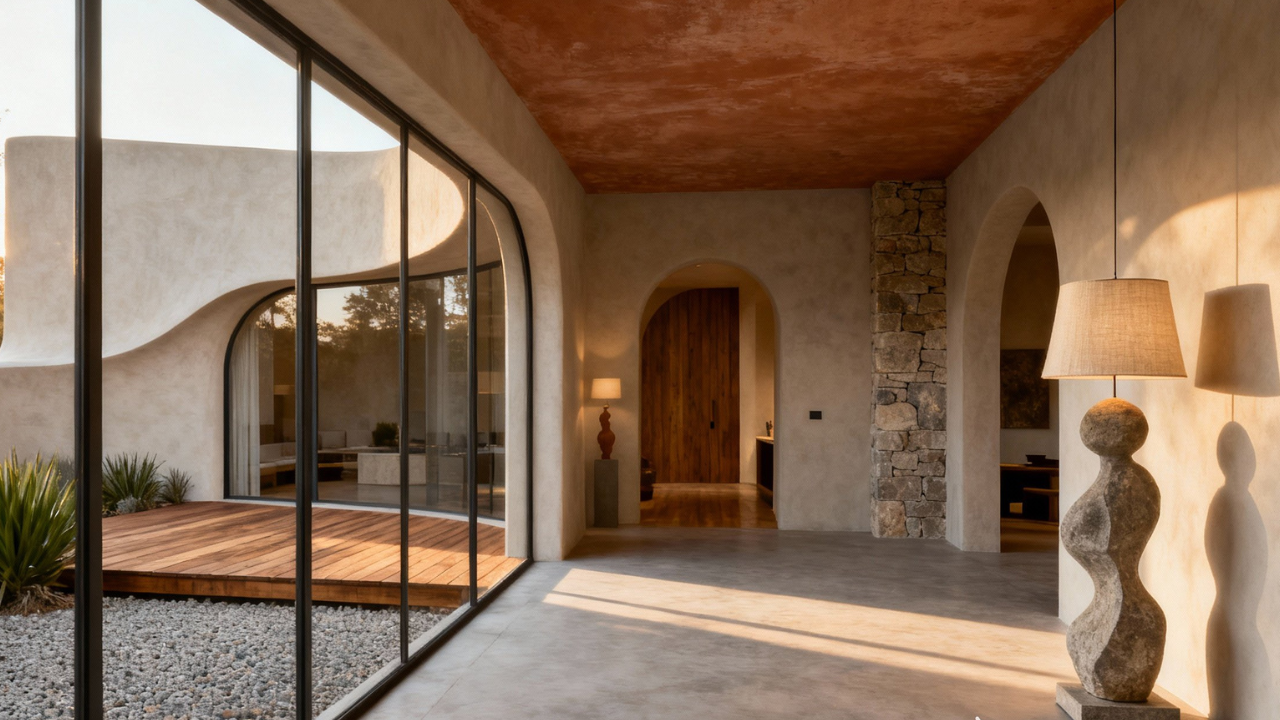
This new generation of minimalist architecture appears as a sophisticated and soft upgrade from the original minimalist design. It emerges primarily as a reaction to the growing perception that overly clean, rigid, and sterile spaces were no longer an effective representation of the complex emotional needs of modern-day humans. Ultimately, despite the fact that it maintains the same core principles of simplicity and “less is more,” it brings vital new elements into play—such as varied texture and dynamic light—and therefore creates residences that feel inherently warm, welcoming, and alive.
Carving Beauty that seeks no Limelight
The beauty of post-minimalism appears not in overt, loud design choices, but in the subtle nuances that ground a space. It is found in the soft, rhythmic passage of natural light through raw wood grains, the tactile quality of heavy linen, and the selection of warm, neutral tones that soothe the eye and mind simultaneously. Therein lies the unique aesthetics that creates a profound sense of harmony without having to overdress the design with unnecessary ornamentation. It is an architecture of “quiet luxury,” where the quality of the atmosphere speaks much louder than the complexity of the shapes.

Organic Materials and the Basis of Warmth
Material choice marks an integral element of the post-minimalist strategy, moving away from cold steel and high-gloss plastics. The deliberate use of natural woods, unpolished stone, breathable linen, and soft matte finishes introduces incredible depth and variety into the space through both visual and haptic experiences. Every surface in a post-minimalist home is designed to be tactile and emotionally engaging, offering an ambiance of home that feels physically close and spiritually warm. These natural elements, therefore, ensure that the simplicity of the form achieved is tempered and balanced by a raw, natural quality that ages beautifully over time.

A Space That Breathes
Even today, post-minimalism maintains the strategic use of open space as the primary medium of calm and clarity. However, unlike its predecessor, this empty space is never experienced as cold, hollow, or intimidating. Through the intelligent use of warm textures and a seamless transition between different zones, the visual calm becomes comfortable and soothing rather than stark. This intentional layout makes the environment not only an organized space for daily activities but a genuine refuge for psychological well-being, allowing the inhabitant’s mind to expand and relax without visual clutter.

Light as a Language of Emotion
In the world of post-minimalism, light transcends the functional boundaries of mere illumination and becomes a powerful emotional story. Soft morning light filtered through sheer drapes creates a distinct, hopeful ambiance, while the strategic use of warm-toned artificial lighting creates an element of play and sanctuary during the night. Furthermore, the intentional shadows created on textured or plastered walls are aesthetically attractive and provide a sense of time passing. Every aspect of light, whether natural or curated, layers the desired mood and highlights the architectural soul of the building.

A High-Quality Neutral Palette
The use of the neutral color palette that characterizes post-minimalism cannot be arbitrary or flat. Instead of clinical white, designers opt for “living” colors such as oatmilk, warm gray, stone beige, and clay brown to ensure visual depth without undermining the overall serenity. This sophisticated palette provides an elegant and timeless balance, acting as a canvas that highlights the furniture and the people within the space. It is a color scheme that feels grounded in the earth, further strengthening the connection between the indoor environment and the natural world outside.

Conclusion
The design that post-minimalist architecture offers can be said to represent the most relevant contemporary approach to simplicity—one that is far more human-centric, warm, and full of emotional resonance. By moving beyond the “sterile” box, this design philosophy offers living spaces that, far from merely being aesthetically pleasing for a photograph, offer profound emotional and functional enhancement potential for the user. It represents an “alive simplicity,” a forward-thinking way of building that honors both the clarity of minimalism and the messy, beautiful warmth of human life.

