


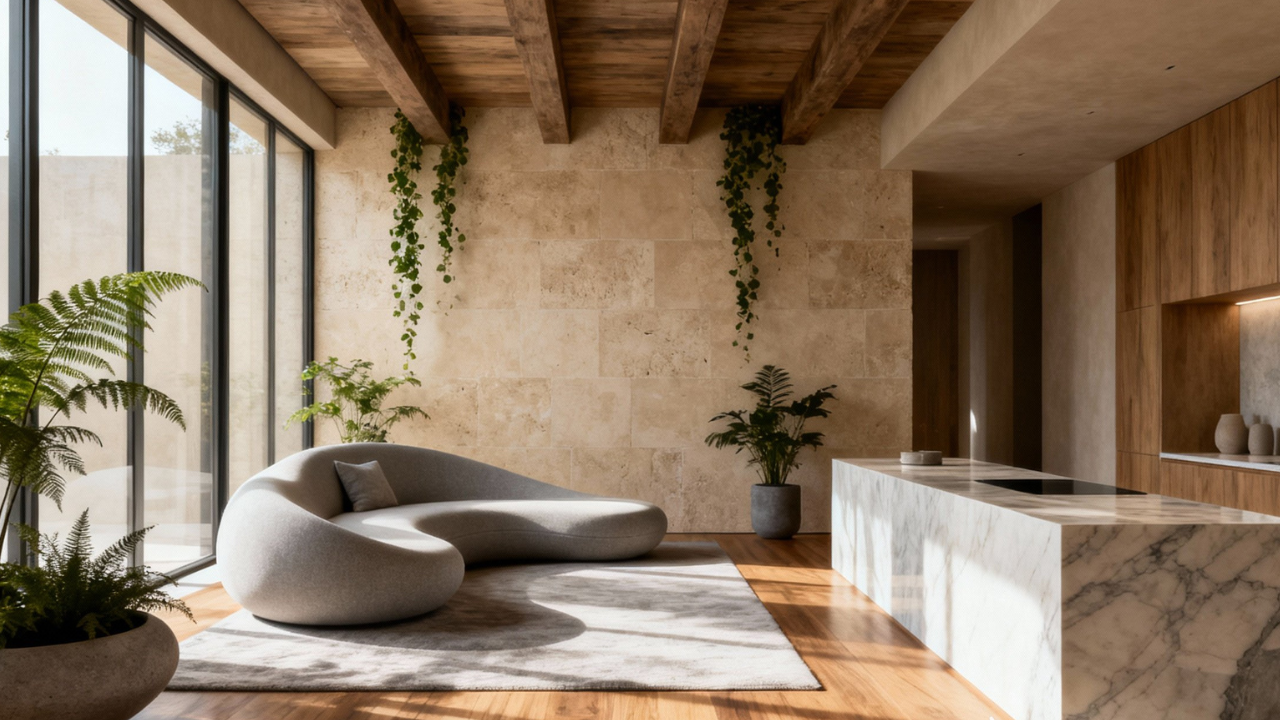
As biophilic design increasingly incorporates plants and greenery into built environments, a new shift is emerging—one that prioritizes the essence of nature over sheer abundance. This innovative approach, known as Silent Biophilia, emphasizes subtle perception and sensory experience rather than the visual clutter of an indoor jungle. It is a design philosophy that seeks to connect humans with the natural world through invisible threads, creating a profound sense of peace that resonates deep within the modern soul.
Light, Breeze, and Shadows: Conducting An Ambient Discourse
One would think of an interior design that highlights the light that enters the window during the dawn phase, as it casts elaborate, shifting patterns on the floor. There would be the presence of the gentle touch of the breeze, which carries the subtlest whiff of damp leaves and fresh earth, and the intricate shadows cast by growing plants on the neutral walls. In this context, the architecture becomes a canvas for nature’s daily movements.
All such elements, hitherto unnoticed in traditional design, are the core essence of Silent Biophilia. In the case of Silent Biophilia, light, wind, and shadows are no longer mere background elements but active storytellers. They dictate the rhythm of the day, allowing the inhabitant to feel the passage of time and the changing of seasons without ever stepping outside. This ambient discourse creates a living atmosphere that feels constantly in motion, yet remains perfectly still.

Organic Materials, The Poetry of Touch
In the case of Silent Biophilia, the stories are performed by each carefully selected material. The warm, reclaimed wood floor invites walking barefoot, offering a grounding sensation that connects the body to the earth. Similarly, the raw touch of the surfaces of a natural stone wall invites a moment of pause, as well as the silent, meditative passage of the mind. Every texture is chosen for its haptic quality and its ability to age gracefully.
Fibers and natural textiles, such as raw silk or heavy linen, bear the silent stories of toil and craftsmanship. These materials, instead of competing with the rest of the design elements, enhance the space and produce an architecture that is experienced through the skin, not merely observed with the eyes. This poetry of touch transforms a house into a sanctuary, where every surface provides a sense of security and organic comfort.

The Sound of Nature—A Gentle Symphony
This nature, as expressed through Silent Biophilia, goes well beyond simple observation and visual engagement. Listening becomes an active, vital process that becomes seamlessly integrated into the architectural design. A well-designed space might include the distant, rhythmic sound of an underground fountain or the soft, whistling sound of the wind as it passes through a strategically opened window.
Even the organic sound of wood creaking slightly as one walks on it contributes to the gentle symphony that envelops the dwelling. These auditory experiences are not distractions; they are the “white noise” of nature that lowers cortisol levels and boosts mental clarity. By designing for the ears as much as the eyes, Silent Biophilia creates a multi-dimensional environment that protects the inhabitant from the chaotic noise of the outside urban world.

Conclusion—The Elegance of Restraint
Silent Biophilia exhibits the rare qualities of restraint, delicacy, and emotional sensitivity. The above exploration makes it clear that nature as a material does not necessarily need to express itself boldly or loudly to be important. Indeed, the masterful combination of light and shadow, the invisible wind, and the organic sounds of nature gives an ambiance that becomes serenading, enveloping, and deeply soothing. This, truly, is an architecture that whispers to the soul, proving that sometimes, the most powerful connections to nature are the ones we feel rather than see.

